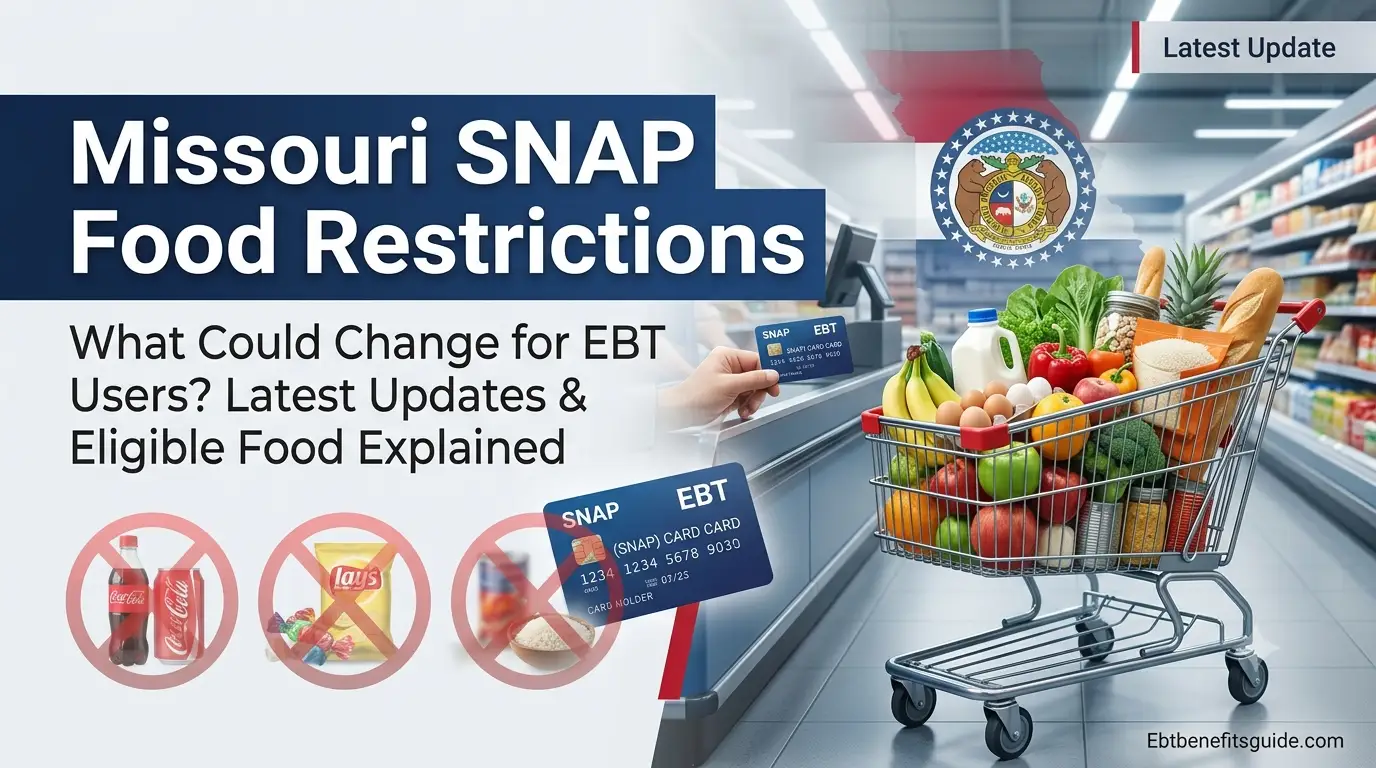
Missouri’s expanded SNAP food restrictions don’t start until February 15, 2027. As of today, July 19, 2026, nothing has changed at the register — Missouri households are still shopping under the same EBT rules that have always applied.
The USDA originally set an October 1, 2026 start date. Then on June 15, 2026, the Food and Nutrition Service approved Missouri’s request to push that back and revise some of the restricted-product definitions. February 15, 2027 is now the official date on the USDA Missouri waiver page.
This matters because older news articles and some state websites still show October 2026. If you’re a Missouri resident, retailer, or working with a community organization — go by the federal date.
Fact-checked: July 20, 2026.
What Are Missouri SNAP Food Restrictions?
Standard federal SNAP rules govern Missouri right now. Starting February 15, 2027, the Healthy SNAP waiver adds a new layer of restrictions targeting specific candy, prepackaged ready-to-eat desserts, certain sugary or low-juice beverages, and qualifying energy drinks.
SNAP itself isn’t going away. The monthly benefit amount stays the same — what changes is which products it can pay for.
The rules are statewide. Kansas City, St. Louis, Springfield, Columbia, the Ozarks, rural counties — same definitions everywhere.
Explore more: See Which States Are Restricting SNAP Foods — All 50 States
What Applies Before February 15, 2027?
Until the waiver kicks in, the existing rules still apply. Missouri EBT cards cannot currently be used for:
- Alcohol
- Tobacco products
- Hot prepared food
- Food prepared for immediate consumption
- Vitamins and medicine
- Dietary supplements
- Pet food
- Paper products
- Soap and household supplies
- Other nonfood products
Eligible healthy foods cover the basics: fruits, vegetables, meat, poultry, fish, dairy, bread, cereal, rice, pasta, frozen food, and ingredients for home cooking.
Those ordinary restrictions stay in place after February 2027 too. The Healthy SNAP categories get added on top.
| Product category | Before February 15, 2027 | From February 15, 2027 |
|---|---|---|
| Alcohol and tobacco | Restricted | Restricted |
| Hot prepared food | Restricted | Restricted |
| Medicine and supplements | Restricted | Restricted |
| Household and nonfood items | Restricted | Restricted |
| Candy covered by Missouri’s definition | Generally eligible today | Scheduled to be restricted |
| Prepackaged ready-to-eat desserts | Generally eligible today | Scheduled to be restricted |
| Defined sugary or low-juice drinks | Generally eligible today | Scheduled to be restricted |
| Qualifying energy drinks | Generally eligible today if sold as food | Scheduled to be restricted |
Which Foods Will Become Restricted?
The Healthy SNAP waiver targets four product groups. What matters isn’t which aisle an item sits in — it’s whether the product fits the approved definition and how the retailer has coded it.
Candy
Missouri defines candy as a product made by combining sugar or artificial sweeteners with chocolate, fruit, nuts, caramel, or flavorings — typically sold as bars, drops, or pieces. The likely targets:
- Hard candy
- Gummies
- Caramels
- Chocolate candy bars
- Sweetened candy pieces
- Fruit-flavored candy drops
Two exceptions exist: items containing flour, and products requiring refrigeration. Neither is a guaranteed escape hatch. A flour-containing sweet that avoids the candy definition might still get flagged as a prepackaged ready-to-eat dessert.
Prepackaged ready-to-eat desserts
Processed, shelf-stable, sweet foods you can eat straight from the package. Missouri’s Healthy SNAP resources list these as examples:
- Cookies and brownies
- Cupcakes and snack cakes
- Doughnuts and muffins
- Pastries and sweet rolls
- Pies and cakes
- Pudding
- Churros and scones
- Gelatin desserts
A box of cake mix doesn’t qualify here — it requires preparation. Flour, sugar, eggs, baking ingredients stay eligible. Refrigerated and frozen desserts are less clear-cut; shelf stability and immediate consumption are both part of the definition, so verify those products specifically.
Sugary drinks, juice, punch and tea
The restriction covers carbonated and noncarbonated soft drinks with more than 10 grams of sugar per serving. A beverage clears the restriction if it:
- Contains milk or milk products
- Contains soy, rice, or another milk substitute
- Is more than 50% fruit or vegetable juice by volume
A bottle labeled 100 percent fresh apple juice clears that threshold. A fruit drink with 10% juice doesn’t.
Check the sugar amount per serving — not per container. Many bottles hold multiple servings, so the math changes. Diet and zero-sugar drinks are an interesting case since Missouri’s threshold is specifically “more than 10 grams of sugar per serving,” but confirm through official guidance rather than assuming.
Energy drinks
Targeted here are beverages formulated with stimulants — fortified caffeine, guarana, taurine, glucuronolactone — plus ingredients like ginseng, amino acids, vitamins, or sugars marketed for energy, alertness, or physical performance.
Sports hydration drinks are excluded from this definition. Medically necessary nutritional products are too. One brand can sell items that fall on different sides of that line, so check the specific item, not just the name on the can.
Read also: See Your Missouri EBT Deposit Date — EBT Payment Schedule by State
What Can Missouri SNAP Still Buy?
Healthy SNAP doesn’t limit households to fresh produce. The eligible list stays broad:
- Fresh, or frozen fruits
- Fresh, or frozen vegetables
- Meat and fish
- Milk, cheese and qualifying milk substitutes
- Eggs
- Bread & cereal
- Rice & pasta
- Beans and lentils
- Flour, sugar and cooking oil
- Cold foods intended for preparation at home
- Seeds and plants that produce food
- Plain water
- Qualifying fruit & vegetable juice
A realistic eligible cart: oatmeal, milk, bananas, peanut butter, bread, eggs, chicken, rice, frozen vegetables, beans, cheese, 100 percent fresh fruit juice. That’s a full week of groceries without hitting a restriction.
One note — eligible doesn’t mean medically appropriate for everyone. If you’re managing diabetes, food allergies, or another condition, follow your healthcare provider’s guidance, not just the EBT eligibility list.
How to Check Whether a Beverage Will Qualify
After February 15, 2027, run through this before checkout:
- Confirm it’s a beverage, not a supplement
- Pull up the Nutrition Facts panel
- Check sugar grams per serving
- Find the juice percentage on the label
- Look for milk, soy, rice, or a milk substitute
- Determine whether it’s marketed for energy or hydration
- Confirm the product’s status at an authorized retailer
A “Supplement Facts” panel means it’s already excluded under regular SNAP rules. “Nutrition Facts” suggests ordinary food — but that label alone doesn’t override other restrictions.
What Happens at Checkout?
Retailers use point-of-sale systems and UPC databases to sort eligible from restricted products. A mixed cart works like this:
- The cashier scans everything
- The system flags SNAP-eligible products
- You swipe your EBT card and enter your PIN
- SNAP covers the eligible items
- Restricted products remain
- You pay for those separately — or leave them behind
Getting a product declined doesn’t mean you’ve done something wrong. You may not know the rule changed, or the product may be miscoded in the store’s system.
What to Do When an Item Is Declined
Stay calm and identify exactly which item triggered the issue. Then:
- Check your available EBT balance first
- Read the Nutrition Facts or Supplement Facts label
- Ask the retailer to confirm the UPC classification
- Keep the receipt and photograph the product label
- Request to speak with a supervisor about the store’s process for coding errors
- Contact the Missouri Family helpline Division if it still seems wrong
Missouri DSS handles SNAP questions at 855-373-4636. For PIN or EBT card issues, call the vendor help desk at 800-997-7777.
Cashiers typically can’t override SNAP eligibility at the register. Miscoded products need to be fixed at the database level.
Does the Policy Apply to SUN Bucks?
Yes. Missouri confirmed that Healthy SNAP restrictions also apply to SUN Bucks, the Summer EBT program for eligible school-aged children.
No separate application required. Existing SNAP and SUN Bucks participants transition automatically when the new rules take effect.
WIC is its own program with its own approved product lists. Don’t assume something SNAP rejects is automatically ineligible or eligible under WIC.
Are the Rules Different Across Missouri?
The definitions are identical statewide — St. Louis and Kansas City follow the same standards as Cape Girardeau, Joplin, St. Joseph, and every rural county.
What differs is access. Urban areas tend to have more authorized stores and participating farmers markets. Rural households may be dealing with fewer options, longer drives, and a smaller selection of qualifying alternatives.
Missouri EBT cards work at authorized retailers across the country wherever you see the Quest Mark. When shopping near a state border, the point-of-sale system applies the rules for wherever the transaction takes place.
The USDA SNAP retailer locator helps you find participating stores. For immediate food needs, Missouri 211 and regional food banks are both worth contacting.
Related guide: Get More from Your EBT Card — Discounts & Savings by State
Farmers Markets and Double Up Food Bucks
Many Missouri farmers markets accept SNAP, though participation varies by location. Some markets and stores also participate in Double Up Food Bucks — a program that matches qualifying fruit and vegetable purchases, which can meaningfully stretch a monthly benefit.
Matching limits and participating locations change, so check the Double Up Food Bucks location finder before making a trip.
Healthy SNAP doesn’t create a separate application or charge. And it doesn’t guarantee produce-matching benefits for anyone.
How Missouri Retailers Should Prepare
February 15, 2027 is close enough that preparation needs to start now. Consumer product descriptions don’t always match the approved legal definitions — and that gap is where checkout problems happen.
A solid preparation checklist:
- Review the amended USDA waiver
- Study Missouri’s approved product definitions
- Update UPC and SNAP eligibility databases
- Test mixed eligible and restricted transactions
- Train cashiers and supervisors
- Create an escalation process for disputed products
- Provide respectful customer explanations
- Monitor Missouri DSS and USDA updates
- Avoid classifying an entire brand based on one product
- Keep implementation notices current
Overlapping categories deserve special attention. A flour-containing chocolate product might clear the candy definition but land in the prepared dessert category. A sports drink and an energy drink can look nearly identical on the shelf and be classified differently based on ingredients and how they’re marketed.
Does the Federal Court Ruling Stop Missouri’s Restrictions?
A federal judge ruled in June 2026 that USDA lacked authority to approve food-restriction waivers — but the five plaintiff states in that case were Colorado, Iowa, Nebraska, Tennessee, and West Virginia.
Missouri wasn’t one of them. The ruling doesn’t automatically cancel Missouri’s waiver.
The legal landscape is uncertain, though. Appeals, additional litigation, or administrative decisions could still affect Missouri’s timeline. Check the USDA waiver page and Missouri DSS announcements as February 2027 approaches — don’t assume anything is final until it is.
FAQs about Missouri SNAP Food Restrictions
When do Missouri’s new SNAP food restrictions begin?
February 15, 2027. USDA approved that revised date on June 15, 2026, replacing the earlier October 1, 2026 start date.
Can I still buy soda with EBT in Missouri in 2026?
Yes. Missouri’s sugary beverage restriction doesn’t take effect until February 2027.
What foods are being removed from Missouri SNAP?
Defined candy, prepackaged shelf-stable ready-to-eat desserts, beverages with more than 10 grams of sugar per serving, drinks with 50 percent or less natural juice content, and eligible energy drinks.
Can Missouri EBT buy cookies?
Currently, yes. Packaged shelf-stable ready-to-eat cookies are scheduled to become restricted on February 15, 2027 — not before.
Can SNAP buy 100% fruit juice in Missouri?
Beverages with more than 50 percent fruit or vegetable juice fall outside Missouri’s low-juice restriction. A genuine 100% juice items stays allow, but the retailer’s item coding controls what actually happens at checkout.
Are sports drinks and energy drinks treated the same?
No. Missouri’s definition targets beverages formulated to enhance energy, alertness, or performance. Sports hydration drinks are excluded from that category — though individual products still need to be verified.
Does Healthy SNAP reduce my monthly benefit?
No. The restrictions don’t change the dollar amount deposited into your account. They affect which products that money can buy after implementation.
Do I need to apply separately for Healthy SNAP?
No separate application needed. Existing SNAP and SUN Bucks participants transition automatically.
Can I pay cash for a product SNAP rejects?
Yes. In a mixed transaction, EBT covers the eligible items and you pay another way for anything that gets flagged.
Can I use a Missouri EBT card outside the state?
Missouri EBT balance can use at approved EBT retailers nationwide. Look for the Quest Mark or use the USDA retailer locator to confirm.
Can I buy hot prepared food with Missouri EBT?
Standard SNAP rules prohibit hot prepared food and food prepared for immediate consumption. A specific emergency waiver could change that temporarily, so check current Missouri DSS guidance if you’re unsure.
Did the federal court ruling cancel Missouri Healthy SNAP?
No. That June 2026 decision involved five other states — Missouri wasn’t part of it. February 15, 2027 still stands, but keep watching for new details.
Conclusion
The October 2026 date is gone. February 15, 2027 is the date Missouri residents, retailers, and community organizations should be planning around — and right now, nothing at the register has changed.
Honestly, the most useful thing you can do today is bookmark the USDA Missouri waiver page. The timeline already shifted once. Given the ongoing litigation, it could shift again — and you’ll want to know before you’re standing in the checkout line wondering why something got declined.
Official Resources
- Apply for Missouri SNAP Benefits — Missouri DSS
- Check Your EBT Balance & Account Status — Missouri DSS
- Find SNAP-Authorized Stores Near You — USDA
- Find Double Up Food Bucks Locations in Missouri — Double Up Heartland

I am the author of EBTBenefitsGuide.com, with 3 years of experience covering SNAP and EBT benefits. They are dedicated to providing accurate, up-to-date details to help readers navigate government assistance programs with confidence.