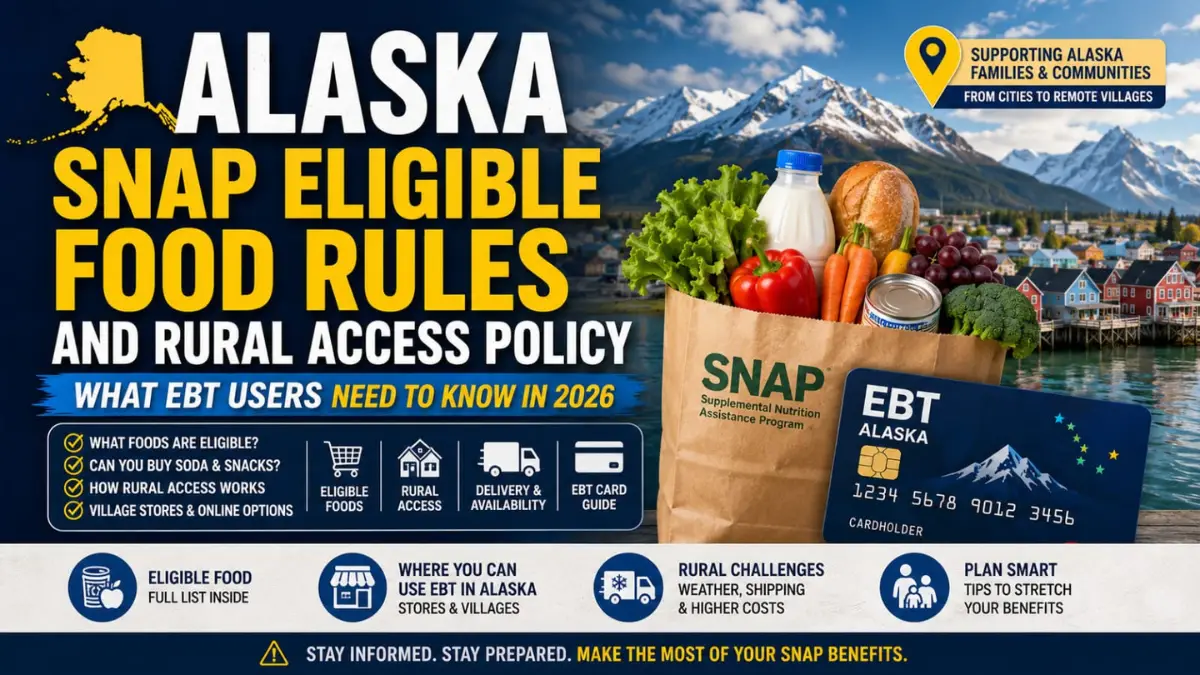
SNAP is a federal food assistance program managed by the United States Department of Agriculture and administered locally by the Alaska Department of Health.
It gives eligible households monthly funds to buy groceries. Benefits are loaded onto an EBT card, which works like a debit card at approved stores.
Unlike some states discussing food restrictions, Alaska follows the standard federal SNAP food list. That means there are currently no extra Alaska-specific restrictions on soda, candy, or snack foods.
What Foods Are Eligible Under Alaska SNAP?
Most grocery items are approved.
Alaska SNAP approved foods
| Food Type | Examples |
|---|---|
| Fruits | Apples, berries, bananas |
| Vegetables | Carrots, potatoes, spinach |
| Dairy | Milk, yogurt, cheese |
| Meat | Beef, chicken, turkey |
| Seafood | Salmon, halibut, crab |
| Bread | White bread, wheat bread |
| Grains | Rice, pasta, oatmeal |
| Frozen Foods | Frozen vegetables, meals |
| Snacks | Chips, crackers, cookies |
| Drinks | Soda, juice, bottled water |
Quick answer:
Yes, Alaska SNAP covers:
- Soda
- Candy
- Frozen foods
- Seafood
- Snack foods
This is one of the most searched questions about Alaska EBT food rules.
What Foods Are Not Allowed?
Some items are always excluded under federal SNAP policy.
Non-eligible items
| Item | Reason |
|---|---|
| Alcohol | Not food assistance |
| Tobacco | Federal restriction |
| Vitamins | Classified as supplements |
| Hot prepared meals | Usually excluded |
| Cleaning supplies | Non-food item |
| Pet food | Not for human use |
These rules apply statewide Alaska.
Why Alaska’s SNAP System Is Unique
In most states, grocery stores are easy to reach.
In Alaska, many communities rely on:
- bush planes
- barge shipping
- ice roads
- boats
- seasonal deliveries
This affects both food prices and availability.
In remote villages, groceries can cost much more because transportation costs are high. That’s why Alaska SNAP rural access policy matters.
How Rural Food Access Works in Alaska
Village stores matter most
In many villages, there may only be one SNAP-authorized store. These stores serve as the primary food source.
Examples include:
- Bethel
- Kotzebue
- Dillingham
- Nome
- Utqiaġvik
These village co-ops are critical.
Weather controls supply
Winter storms can delay:
- milk
- bread
- fresh vegetables
- eggs
This means families often buy shelf-stable foods first. Timing matters.
Higher rural food prices
Here’s a common comparison:
| Grocery Item | Anchorage | Rural Village |
|---|---|---|
| Milk | Lower | Higher |
| Bread | Lower | Higher |
| Eggs | Lower | Higher |
| Fruit | Lower | Higher |
Rural families often spend benefits faster.
Can You Use EBT in Remote Alaska Villages?
Yes. Many rural stores are SNAP-authorized.
But there are challenges:
- slow internet for EBT machines
- limited stock
- seasonal delivery gaps
- higher prices
For example:
A family in Nome may have access to fewer fresh foods than a family in Anchorage. That creates different shopping strategies.
Alaska SNAP and Subsistence Living
This is something many guides ignore.
Many Alaska families rely on:
- fishing
- hunting
- berry picking
- preserving meat
This is called subsistence living. It’s especially important for Alaska Native communities.
While SNAP cannot pay for hunting equipment, it helps cover groceries when local food sources are low.
This overlap is important in rural food security.
Does Alaska SNAP Cover Seafood?
Yes. This matters more in Alaska than most states.
Eligible seafood includes:
- salmon
- cod
- halibut
- crab
- shrimp
As long as it’s sold as food, it qualifies. This helps coastal communities where seafood is a major part of life.
SNAP Online Shopping in Alaska
Online EBT shopping is growing.
Retailers may include:
- Walmart
- Amazon
But access depends on location.
Urban Alaska
In places like:
- Anchorage
- Fairbanks
- Juneau
Online ordering is easier.
Rural Alaska
In bush communities:
- delivery may be unavailable
- shipping may cost extra
- orders may take longer
So if you search “EBT delivery near me in Alaska,” results vary by area.
Village Stores vs Big Supermarkets
| Feature | Village Store | Supermarket |
|---|---|---|
| Variety | Limited | High |
| Prices | Higher | Lower |
| Delivery speed | Depends on freight | Faster |
| Fresh produce | Limited | More options |
| EBT accepted | Often yes | Yes |
This comparison helps families decide where to shop when possible.
Special Food Programs in Rural Alaska
Some tribal communities also use:
Food Distribution Program on Indian Reservations (FDPIR). This supports eligible tribal households with food packages.
It can help when village stores have shortages. Food banks also play a big role. These are important backup systems.
Best Foods to Buy With SNAP in Rural Alaska
If you live in a remote area, shelf life matters.
Smart choices:
- Rice
- Flour
- Canned vegetables
- Frozen meat
- Dried beans
- Oats
- Pasta
- Powdered milk
- Peanut butter
These foods last longer and help during shipping delays.
How to Use SNAP in Winter Alaska
Step-by-step guide
1. Check your EBT balance
Know how much you have.
2. Shop right after benefits arrive
Fresh stock goes quickly.
3. Prioritize essentials
Buy proteins and grains first.
4. Plan for storms
Stock extra food.
5. Freeze what you can
Use freezer storage for meat and fish. This is a major rural survival strategy.
Common Mistakes Alaska SNAP Users Make
Spending too much on snacks
Snacks are allowed, but essentials should come first.
Waiting too long to shop
Village stores may sell out fast.
Not preparing for storms
Weather delays can leave shelves empty.
Ignoring local food banks
Food banks can stretch benefits.
How Alaska Families Can Stretch SNAP Benefits
Practical tips:
- buy in bulk when available
- use frozen foods
- compare village store prices
- combine SNAP with subsistence foods
- preserve fish and meat
- use community support programs
These small choices make a big difference.
Why Alaska’s Rural SNAP Policy Matters
Food insecurity in Alaska is tied to geography. In urban Alaska, access is easier. In rural Alaska, food can be harder to reach and more expensive.
That’s why federal food policy must work differently here. This isn’t just about eligibility. It’s about survival in some communities.
That’s what makes Alaska’s SNAP system unique in the U.S.
Official & Helpful Resources
Get the latest Alaska SNAP updates from trusted sources:
Helpful state guides:
- Check Updated SNAP Income Limits for All 50 States
- See Alaska EBT Payment Dates for 2026
- Explore all States SNAP Food Restrictions for 2026
- find out EBT discounts and offers for all States
FAQs: Alaska SNAP Food Restrictions
1. Can I buy soda with Alaska SNAP?
Yes. Soda is currently allowed under federal SNAP rules.
2. Can I buy seafood with EBT in Alaska?
Yes. Seafood sold as food is SNAP eligible.
3. Are village stores in Alaska SNAP approved?
Many village stores are approved, especially in remote areas.
4. Can I use EBT online in Alaska?
Yes, but mostly in larger cities.
5. Why is food more expensive in rural Alaska?
Transportation, weather, and limited supply increase prices.
6. Does SNAP cover frozen foods?
Yes, frozen foods are allowed.
7. Can I buy hot food with Alaska SNAP?
Usually no, unless emergency waivers exist.
8. What’s the best food to buy in rural Alaska?
Shelf-stable foods like rice, beans, oats, and canned goods.
Conclusion
Alaska SNAP follows the standard federal food rules, but rural access changes how those benefits work in real life.
Families in Anchorage may have easy access to groceries, while families in Bethel, Nome, or remote villages face higher prices, fewer options, and weather delays.
Knowing what foods are eligible, how village stores work, and how to plan around seasonal shortages can make your EBT benefits last longer.

I am the author of EBTBenefitsGuide.com, with 3 years of experience covering SNAP and EBT benefits. They are dedicated to providing accurate, up-to-date details to help readers navigate government assistance programs with confidence.